Find Clarity Early
"Everything seemed fine during initial pregnancy checkups, yet we recently found out that our baby has congenital heart disease. Following surgery, we realized that our baby was developing more slowly than normal. Finally, the doctor diagnosed the problem as DiGeorge's disease after finding a microdeletion on chromosome 22."
Many babies seem to be healthy when they are first born; often parents only notice that their baby is developing slowly when it is already 7-8 months old.
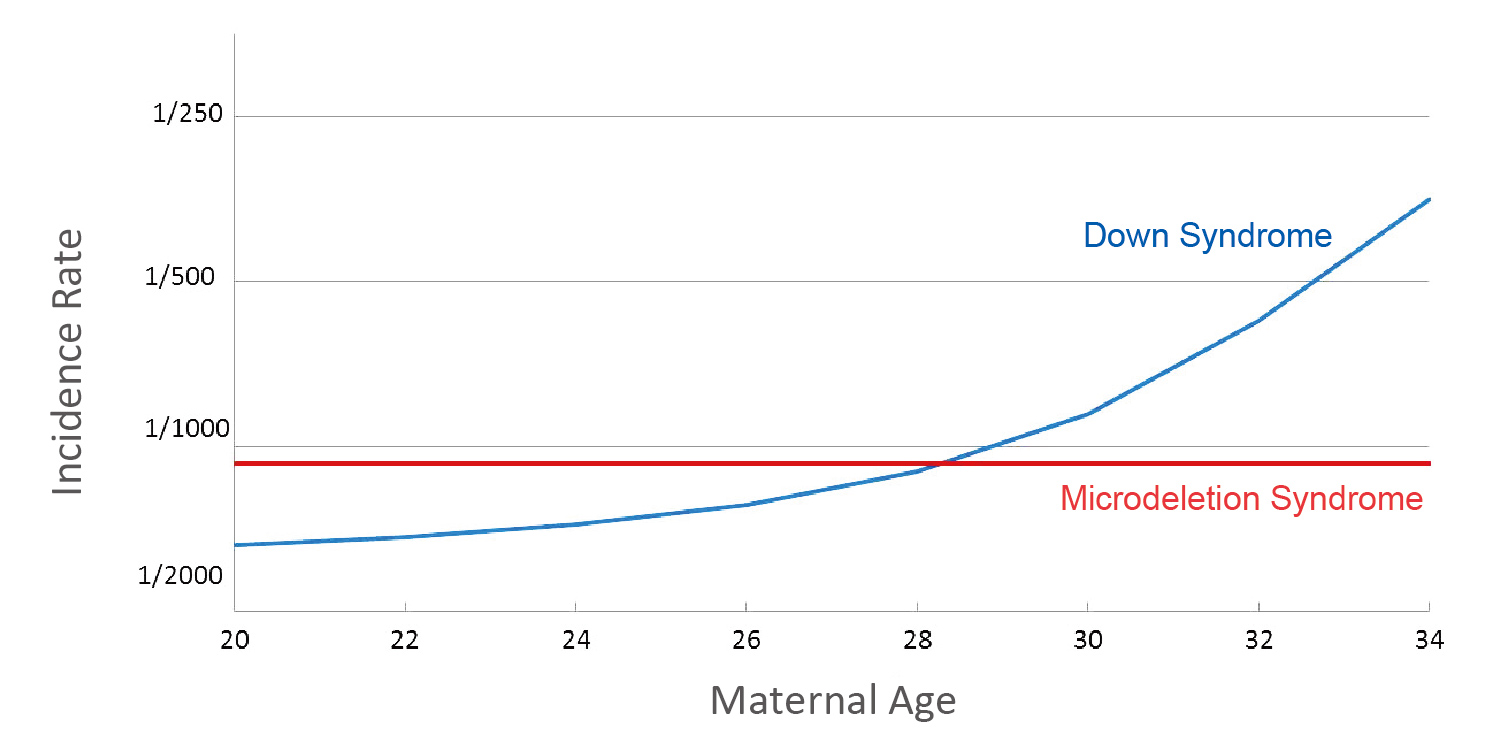
Genetic medicine has undergone great advances over the years. Indeed many problems related to mental and/or developmental retardation which had unclear causes in the past are now known to be caused by chromosome microdeletions. Humans have 23 pairs of chromosomes which control development as well as multiple biological conditions. Amniocentesis is only able to detect mutations which involve large DNA segments or an abnormal number of chromosomes. The risk of a baby suffering from an abnormal number of chromosomes is typically related the mother's age. However, microdeletion occurs equally frequently for both younger and older mothers.
The latest NIPS technology can detect the 20 most common microdeletions. If doctors know the cause of fetal illness, they can predict and analyze possible clinical outcomes. Therefore, many of the baby’s health conditions can be known in advance and without the collection of amniotic fluid . Finally, NIPS is noninvasive, and typically requires only one sample.