Down syndrome testing and diagnosis
Dilemmas associated with Down Syndrome Testing During the First and Second Trimesters of Pregnancy.
Prior to the development of NIPS Genome Sequencing, people typically tested for Down syndrome via Ultrasound Scans, villus sampling, amniocentesis, or blood serum screening during the 1st and 2nd trimester.
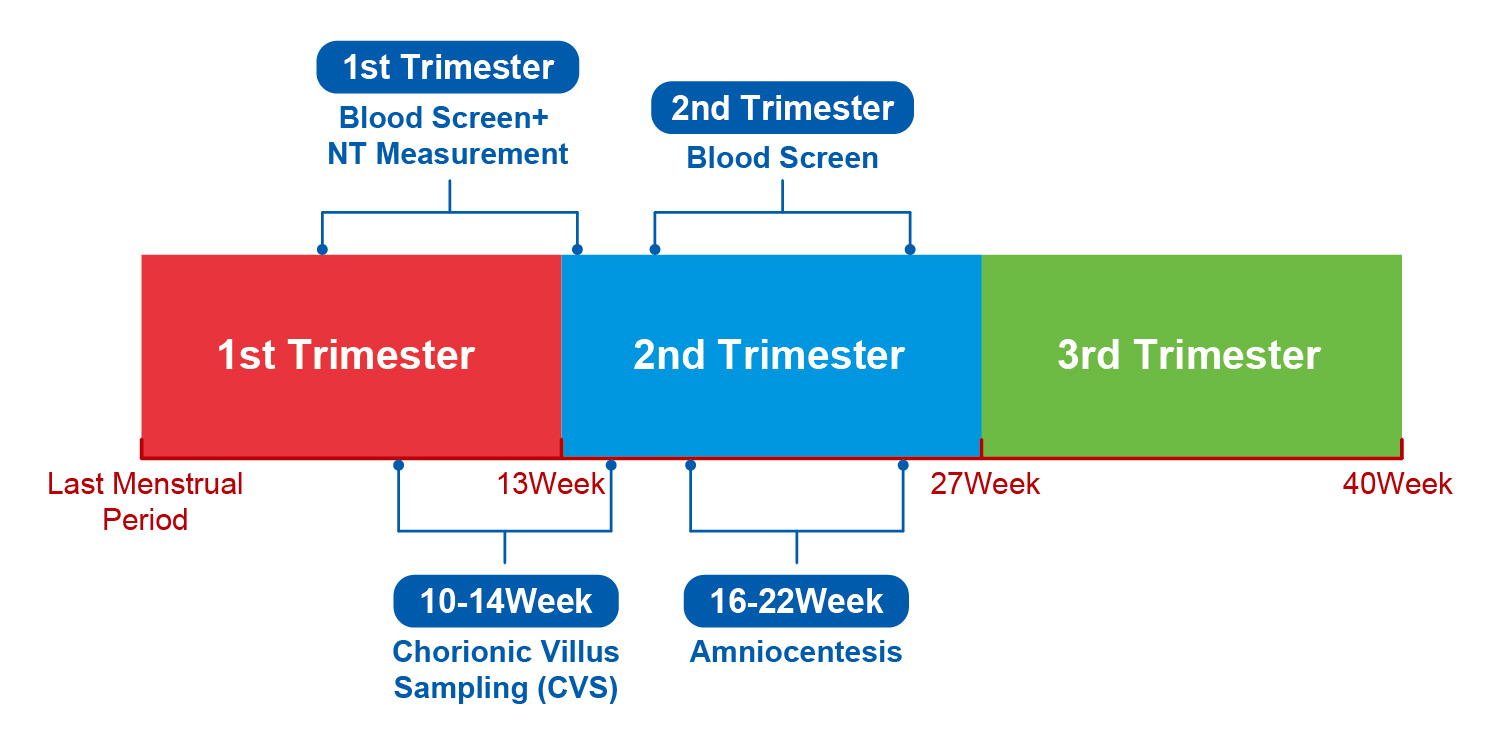
During the early 1980s, it was recommended that all pregnant women over 35 or who have a family history of Down syndrome undergo amniocentesis. However, the accuracy rate of this test was only 35% and caused unnecessary risk to healthy fetuses. In 1984, multiple studies showed that the alpha-fetoprotein (AFP) in the blood serum of a pregnant woman carrying a baby with defective chromosomes is 25% lower than that of a pregnant woman carrying a normal baby. Since then, Down syndrome testing during the 2nd trimester of pregnancy has become more common, and the availability of a greater number of indicators, including β-Human Chorionic Gonadotropin (β-hCG), unconjugated Estriol (uE3), and Inhibin A, has enabled testing accuracy to reach 80%.
In 1991, research showed that Pregnancy Associated Plasma Protein-A (PAPP-A) dropped 50% in the blood of pregnant women carrying a baby with Down syndrome, and this can be tested for around the 8th week of pregnancy. In addition to significant advances in ultrasonic technology that occurred in the early 1990s, Nuchal screening, which assesses levels of Freeβ-hCG and PAPP-A, was developed to test for Down syndrome during the 1st trimester of pregnancy. These advances raised diagnostic accuracy to over 85% for Down syndrome.

According to the American Congress of Obstetricians and Gynecologists (ACOG), the detectability factor associated with the Nuchal scan can increase to 95% if Down syndrome testing is conducted during both the 1st and 2nd trimesters of pregnancy. However, if testing is only conducted once, the detectability factor can drop 20%.
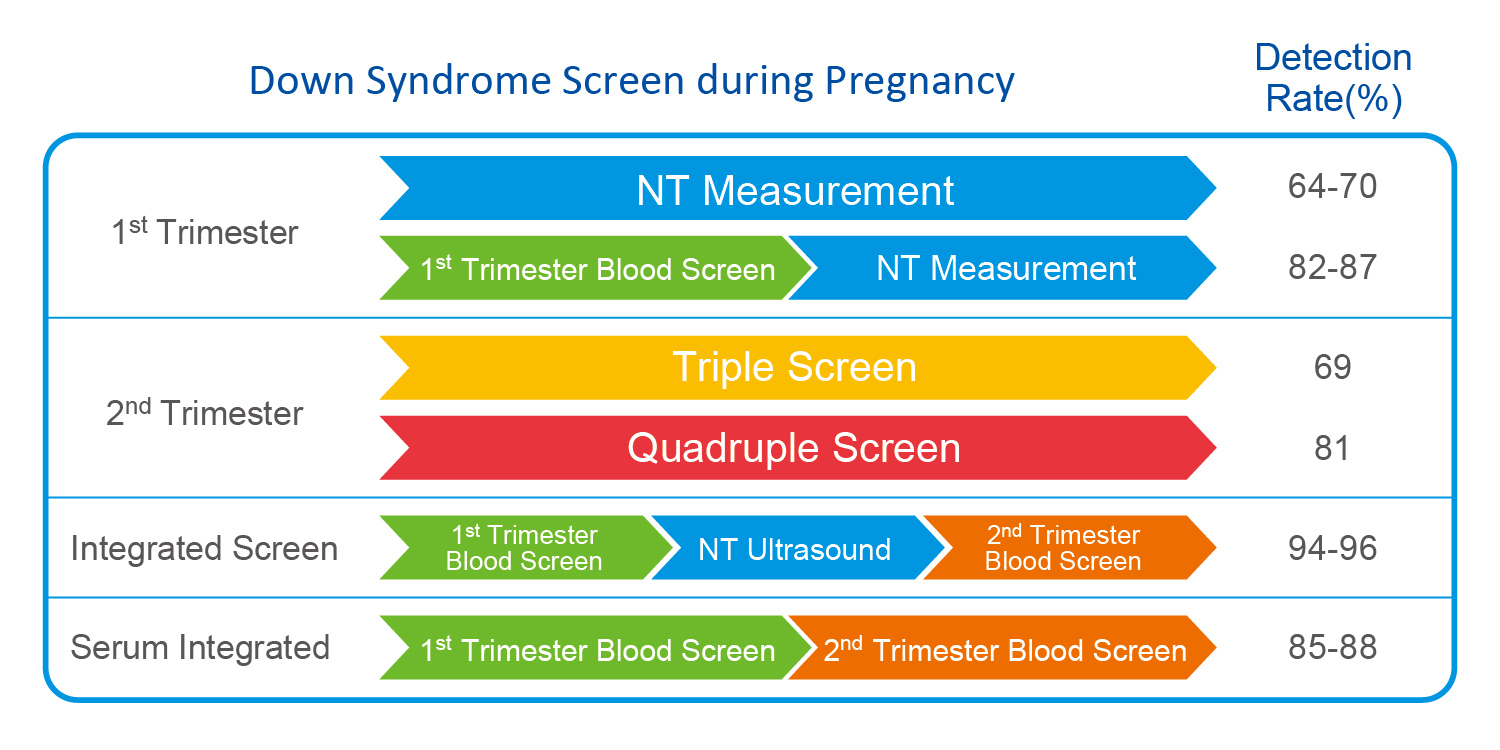
The 1st trimester test should be conducted at around 11-13 weeks of pregnancy in order to comply with Nuchal scan protocol. The 2nd trimester test should be conducted at around 15-20 weeks of pregnancy, and the results report will be returned within 5 days. If any abnormalities are detected, the gynecologist will arrange a series of additional tests, and final results will be ready 2-3 weeks after these additional tests are conducted. If the final results confirm Down syndrome, the parents will have limited time to make a decision regarding the course of pregnancy.
In addition, the Nuchal scan involves more difficult and delicate techniques compared to blood serum testing.