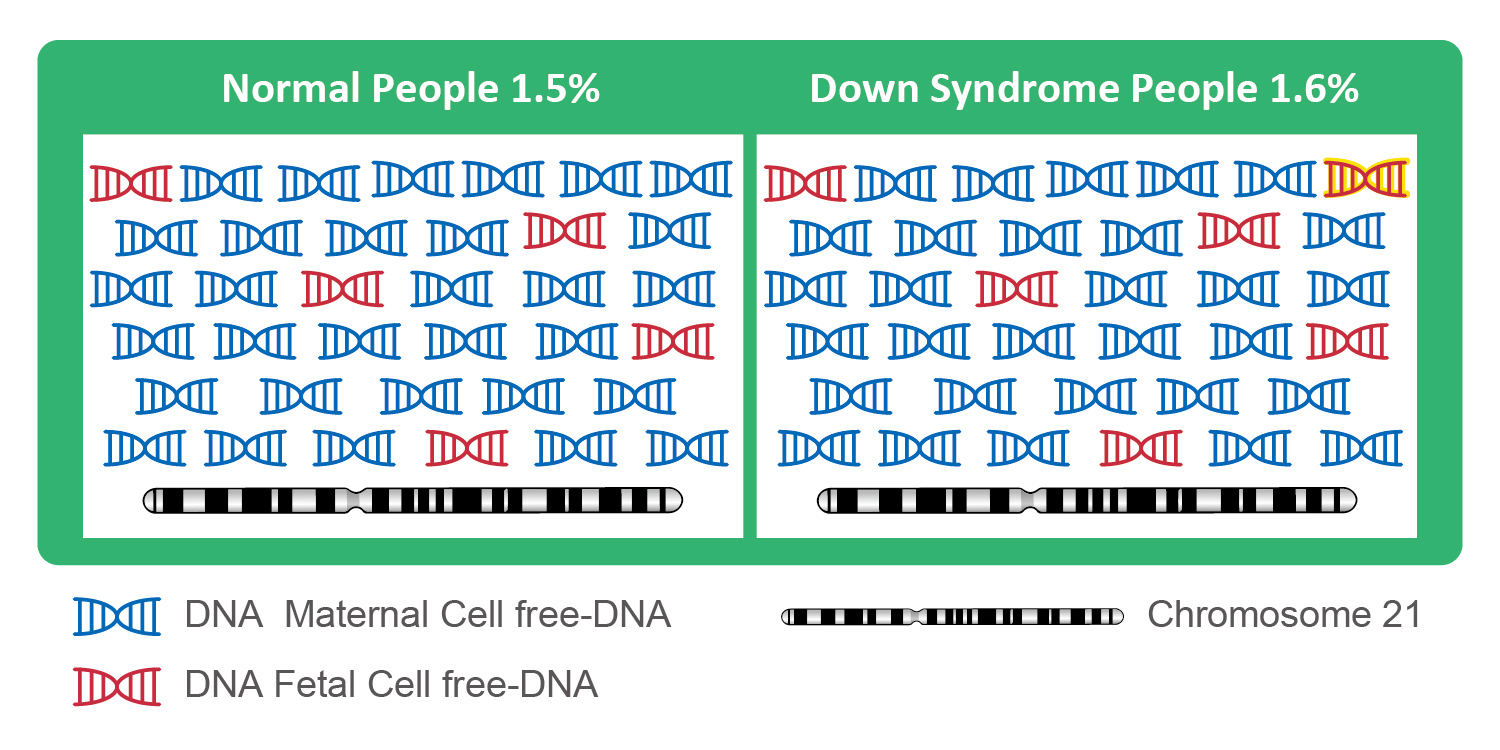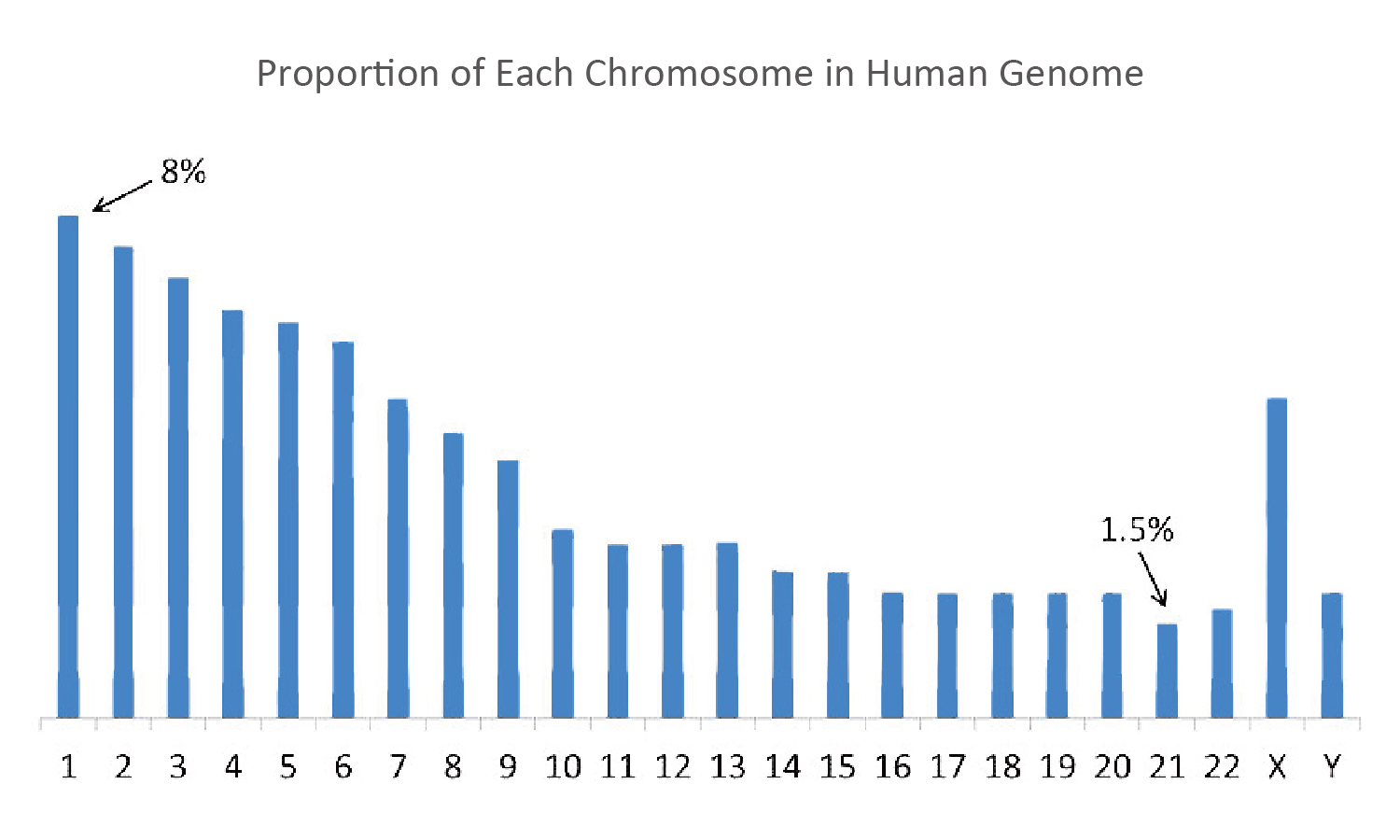
If the fetus has Down syndrome (which is caused by an extra chromosome 21), the percentage of fetal chromosome 21 in the mother’s blood will be higher than that found in normal pregnancies (i.e. 1.5%). The percentage of chromosome 21 in maternal blood is calculated according to the following formula:
% cell-free DNA of the mother (usually around 90%) * expected % of fetal chromosome 21 (i.e. 1.5%) * expected ratio+Cell-free DNA of fetus%*the 21th chromosome%*expected ratio
=90%*1.5%*2/2+10%*1.5%*3/2
=0.0135+0.00225
=1.6%
Therefore, if the fetus has Down syndrome, the concentration of chromosome 21 in maternal blood is 1.6%, which is 6% higher than for normal pregnancies (1.5%). However, note that different companies apply different algorithms to determine whether fetal DNA contains abnormalities.